

































































































































































































































































































































































































































































































































































































































































































Billions Spent, Little Change: Why Nigeria’s Social Safety Nets Are Failing the Poor


Nigeria’s allocation to social protection, amounting to barely 0.14 per cent of its Gross Domestic Product (GDP), remains far below the global average of 1.5 per cent and the Sub-Saharan African average of 1.1 per cent, and has had virtually no effect on poverty reduction, the World Bank has said.
In its new report, The State of Social Safety Nets in Nigeria, obtained on Tuesday, the bank observed that the country’s minimal allocation — representing the combined value of all existing social protection programmes — has reduced the national poverty headcount by just 0.4 percentage points.
According to International Labour Organisation (ILO) data, Nigeria’s spending on social protection averaged 0.45 per cent of GDP between 2010 and 2021. Although 2019 figures showed a slight rise to 0.7 per cent (excluding health), this remains well below regional averages, with actual spending often falling short of budgeted amounts.
Despite a proliferation of intervention schemes — from conditional cash transfers to school feeding programmes — poverty levels have barely shifted. The report attributes this weak impact to poor programme design and diluted benefits.
For example, while the National Social Safety Nets Programme (NASSP) disburses a uniform amount per household, poorer families, which tend to be larger, end up spreading limited funds among more members. A rural family of eight, therefore, receives the same transfer as an urban family of three.
Similarly, the National Home-Grown School Feeding Programme (NHGSFP), which targets individual pupils rather than households, currently reaches only children in grades one to three and covers a limited number of schools.
The World Bank also expressed concern over Nigeria’s heavy reliance on foreign donors to fund social safety nets. Between 2015 and 2021, official development assistance accounted for about 60 per cent of federal spending on these programmes, with the World Bank itself providing more than 90 per cent of that support.
It warned that such dependence leaves Nigeria vulnerable to funding gaps whenever donor support wanes.
“There is an urgent need for Nigeria to find fiscal space for sustainable social safety-net programming,” the bank stated.
At current spending levels, the report said, social protection schemes have almost no measurable effect on the overall poverty headcount rate, poverty gap, or depth.
“The minimal impact is explained, first and foremost, by the low coverage and low expenditure levels,” it said. “Many programmes implemented by federal, state, and local governments — as well as by religious bodies — fail to reach the neediest,” the report added.
Consequently, Nigeria’s poverty reduction outcomes remain far below those of most lower-middle-income countries, and even lower-income nations with weaker economies.
The report further noted that the poorest households, being larger, experience greater benefit dilution, which reduces the impact of social protection on inequality among the poor.
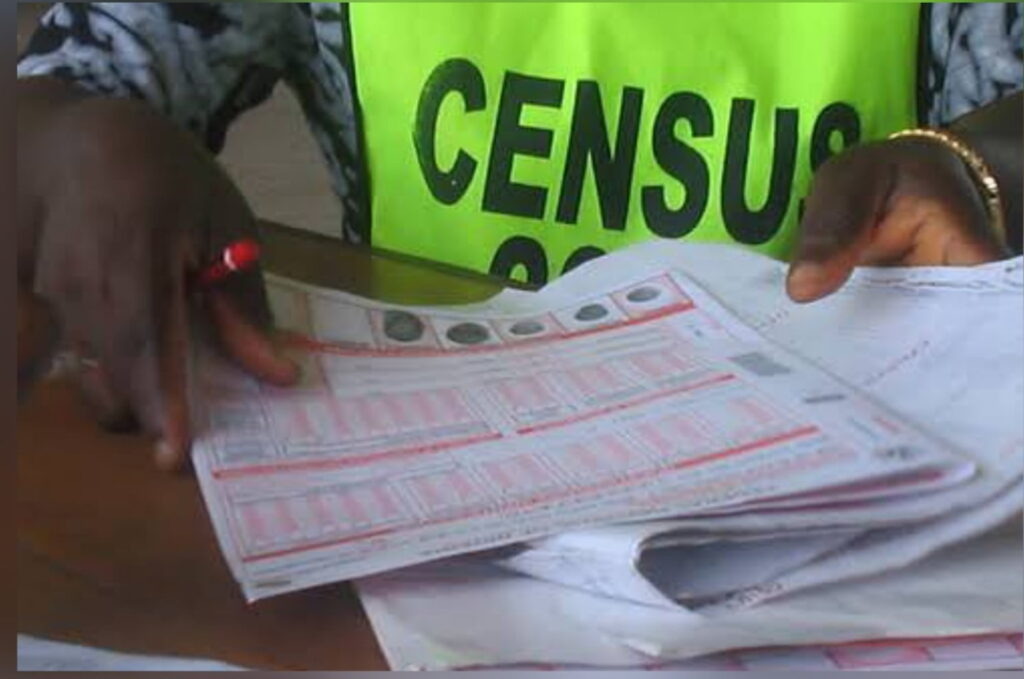
However, it found that well-targeted schemes could deliver stronger results. The NASSP cash-transfer programme, which uses the National Social Registry (NSR) to identify and reach poor households, reduced poverty among its beneficiaries by 4.3 percentage points and the poverty gap by 4.2 percentage points — nearly ten times the national average impact.
With more than 85 million individuals captured, the NSR — now the largest such database in Sub-Saharan Africa — provides what the bank described as “a ready-made platform” for more accurate and transparent social assistance.
Despite billions of naira spent annually to cushion hardship, the report said Nigeria’s safety-net programmes still fail to reach those who need them most, with only 44 per cent of total benefits actually reaching poor Nigerians.
The November 2025 report assessed the coverage and efficiency of Nigeria’s social protection spending and concluded that weak funding, poor targeting, and fragmented implementation continue to undermine poverty reduction efforts.
Recently, the Minister of Finance and Coordinating Minister of the Economy, Mr. Wale Edun, announced that the Federal Government aims to reach 15 million households — about 70 million Nigerians — through its digital cash-grant scheme. He disclosed that about 8.5 million households had already received at least one tranche of the ₦25,000 payment, while the remaining 6.5 million are expected to be paid before the end of the year.
Nonetheless, the World Bank maintained that Nigeria’s safety-net spending remains inefficient, as poorer households receive a smaller share of total benefits despite making up most beneficiaries.
It explained that while 56 per cent of recipients are poor, they receive only 44 per cent of total benefits, due largely to the household-based allocation method.
“Even in well-targeted programmes,” the report said, “the same benefit amount is divided among a larger number of people in poorer households.”
It noted that schemes such as the NHGSFP, which target individuals, are less affected by this flaw but remain limited in scope because they cover only early primary school pupils.